Innovative ways of addressing Europe’s Cancer Mission, Social Innovation and Thoughts on European Policy Developments:
Insights to the ECHoS project with coordinators Anabela Isidro & Hugo Soares
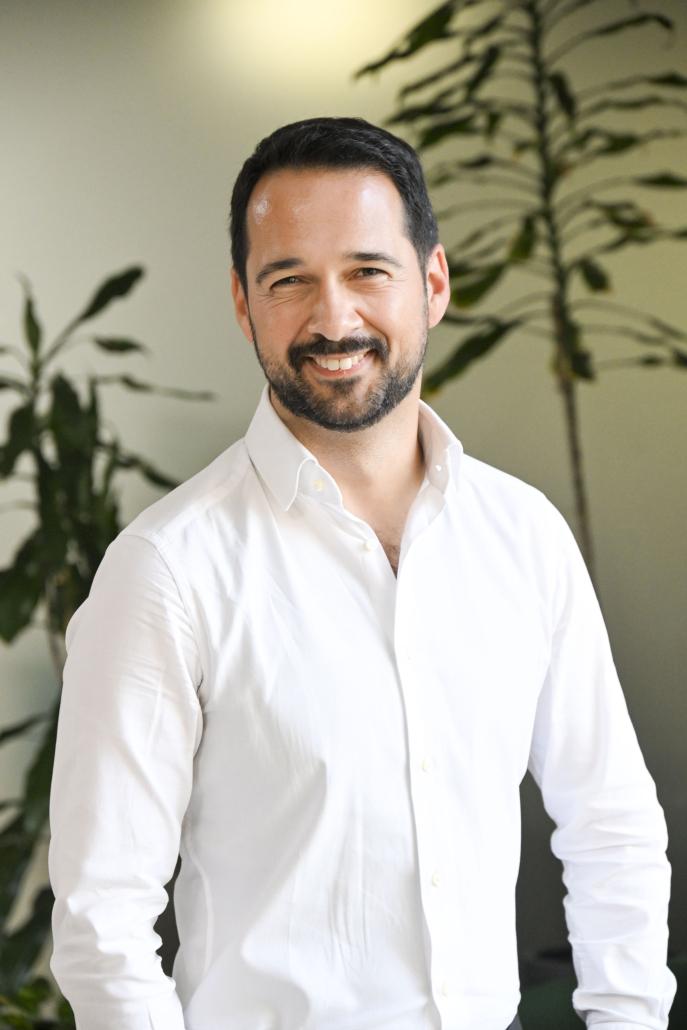
Hugo Soares works in science management and international cooperation at AICIB. He coordinates the ECHoS project and leads its implementation in Portugal through the Portuguese National Cancer Mission Hub.
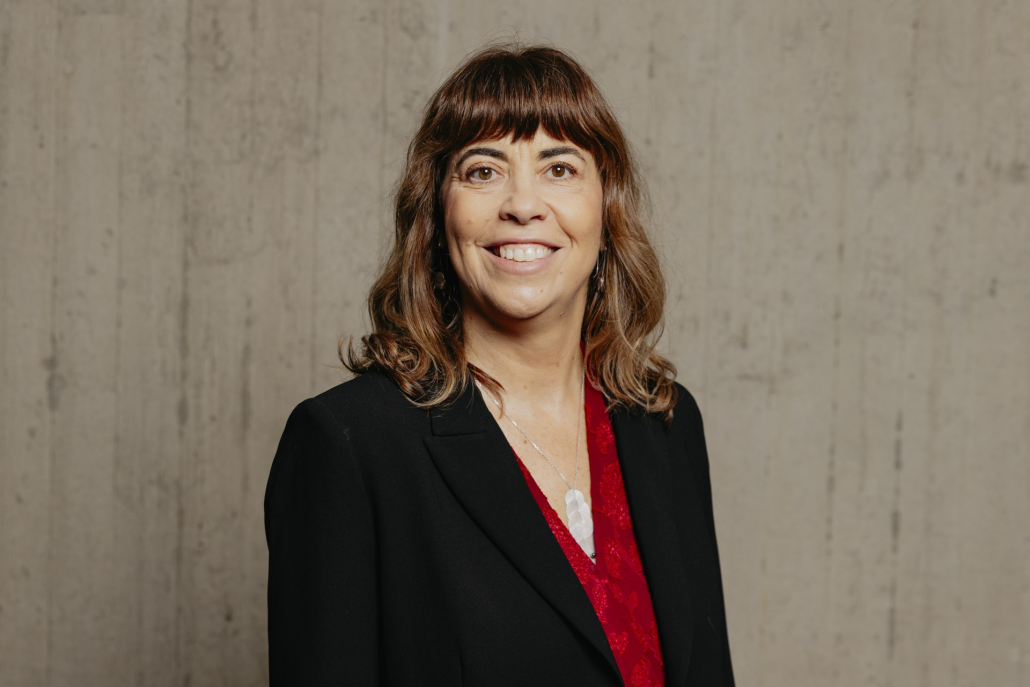
Anabela Isidro is a member of the board of AICIB, the Portuguese Agency for Clinical Research and Biomedical Innovation, and coordinates ECHoS alongside her colleague Hugo Soares. She describes her role as working at the interface between research policy and implementation.
Background information on the project
How does ECHoS contribute to the European Cancer Mission?
ECHoS aims to translate the objectives of the European Cancer Mission – that is to improve the lives of more than 3 million people by 2030 through prevention, cure and for those affected by cancer including their families, to live longer and better – into practical action at national and regional levels.
Its central instrument is the establishment of National Cancer Mission Hubs (NCMHs), which brings together stakeholders who often work separately, including policymakers, researchers, healthcare professionals, patients, citizens, industry and other relevant organisations.
The hubs are intended to overcome fragmentation, align priorities and create synergies between existing initiatives. Rather than replacing existing organisations or structures, they provide a platform for collaboration and coordinated implementation.
What does Social Innovation look like in the ECHoS project? Could you provide a specific example?
The [National Cancer Mission] Hubs themselves could be described as a form of social innovation because they introduce new models of collaborative governance. The longer-term ambition is to establish structures and a European network that can continue operating beyond the lifetime of individual projects.
“The Hubs are not only implementation structures, they are themselves a form of social innovation because they introduce a new model of collaboration or collaborative governance.” — Anabela Isidro
ECHoS has so far established 17 National Cancer Mission Hubs, with 13 additional NCMHs in development. Germany and France are already relatively well in development, awaiting formal recognition, while the other hubs in development are at earlier stages.
The first phase of ECHoS focused on developing a shared conceptual foundation, including governance, values, strategy and implementation. The establishment of hubs began in 2025, while the second phase now aims to consolidate the network and strengthen cooperation between its members.
The governance of the hubs is not universal and entails arrangements that differ considerably across countries, ranging from patient-led structures that are taking the lead (as in Greece) to government-linked structures like in Sweden [HS2] or Portugal or even different approaches.
“It’s not how you do it that matters, […] what we are looking for is the output itself.” — Hugo Soares
The emphasis is therefore on the value and results of collaboration, rather than on replicating an identical structure in every country.
Further forms of social innovations emerge at national levels, where different interventions in the NCMHs are rolled out and respond to patients’ and stakeholders’ needs in new ways. This entails, for example, a practical guide that has been developed for cancer patients and carers (example from Portugal) thatbrings together information on the practical questions people face after receiving a cancer diagnosis, including legal rights, nutrition, oral hygiene, wigs and sexuality.The example illustrates how collaboration can generate a practical resource centred on patients’ lived experiences, rather than focusing exclusively on medical treatment.
A second example to name out of many, is a culturally sensitive patient engagement (example from Ireland). This initiative brings patient associations together through cultural activities that create opportunities for people to discuss their experiences and exchange recommendations. I[HS3] t specifically engages underrepresented communities, including people from Pakistani and Indian backgrounds.
Isidro also mentioned spill-over effects that might result from the Hub activities and points to a broader principle: innovations are more likely to generate societal value when the people and systems expected to use them are involved in their development.
“It’s not enough to do a good research project and develop a very innovative technology. But then if the society or the systems are not ready to take it up then it will stay […] somewhere in a lab or in an enterprise.” — Anabela Isidro
Social innovation can therefore help bridge the gap between developing an innovation and creating the conditions for its adoption and use.
Although the terminology “social innovation” was not used in the phase of the project development, practices of social innovation are embedded in the project activities – or as Isidro puts it:
“We were doing social innovation, but without labelling it as a social innovation.”
What are other concrete outputs and results of the project?
There are so far two levels of specific outputs: the establishment of the hubs and the practical changes achieved through their activities.
Policy dialogues leading to implementation
A particularly important output is a methodology for policy dialogues, adapted by ECHoS together with the European Observatory on Health Systems and Policies, a partnership hosted by WHO. These dialogues are conducted around real challenges identified by participating countries rather than hypothetical scenarios.
Some examples include:
- Portugal – lung cancer screening: A policy dialogue addressing the advancement of a lung cancer screening programme contributed to the implementation of two pilot projects approximately one year later.
- Ireland – inequalities in cancer care: A dialogue addressing inequalities in access to treatment for people with severe mental disabilities led to a specific section being incorporated into the country’s forthcoming National Cancer Control Plan strategy. This also resulted in peer-reviewed publications.
- Malta – the hub identified investment in cancer research as a priority and developed a funding scheme to support cancer projects, helping establish a foundation for further research and engagement in European initiatives.
These examples illustrate how the hubs can help translate broad mission objectives into specific actions, institutional changes and funding initiatives.
“We actually take real needs from our partners and our countries that participate in ECHoS, and we go there and we run a policy dialogue in real case needs.” — Hugo Soares
Moreover, with regards to citizen engagement, there is the annual Cancer Mission Fair that is organized by ECHoS in collaboration with the European Commission’s Cancer Mission Secretariat. It brings together project partners and other participants to exchange experiences and showcase approaches to patient and citizen engagement.
The event takes place in the country holding the rotating Presidency of the Council of the EU. Previous editions were held in Poland and Cyprus, with Lithuania planned as the next host at the time of the interview. Alongside plenary sessions, the event includes thematic sessions on specific topics and involves local communities. The fair is an opportunity to share approaches that may constitute social innovation, even when they are not explicitly described in those terms. One example mentioned is PhotoVoice, which can be used to support participation and give people opportunities to communicate their experiences.
“This is one way that we are disseminating part of the social innovation concept without calling it social innovation.” — Hugo Soares
How did you ensure that these policy dialogues resulted in tangible outcomes rather than remaining discussions?
As Hugo Soares puts it, there are three particularly important elements.
First, the dialogue must address a clearly defined question. Broad discussions about a policy issue can generate agreement that action is needed without resolving the practical obstacles. ECHoS therefore focuses on specific bottlenecks preventing implementation, breaking broader topics down into one or two concrete questions.
Second, follow-up and documented outputs are essential. ECHoS follows up with participating partners and asks them to translate discussions into tangible results. Depending on the context, these may include reports with recommendations, policy briefs, strategy documents or academic publications. Written forms also help with presenting outputs to policymakers and for advanced recommendations.
Third, policymakers must participate in the process. Their involvement helps ensure that proposed solutions account for political and administrative constraints, increasing the likelihood that they can be implemented.
What are some barriers and challenges that you are facing in implementing the project?
There are, according to Anabela Isidro, three primary interconnected challenges.
1. Sustainability beyond the project period: Establishing hubs is only the first step. The challenge is to ensure that they remain operational, influential and useful after ECHoS funding ends. This requires stable organisational structures, sufficient capacity, legitimacy and long-term resources.
2. Different national contexts: European countries have different health systems, governance arrangements, resources and levels of institutional maturity. The challenge is to develop a common vision without imposing a one-size-fits-all model.
3. Moving from participation to genuine co-creation: Involving patients and citizens in events is relatively straightforward compared with ensuring that their knowledge and priorities influence policy decisions, research agendas and implementation. It can also be difficulty to engage citizens meaningfully, beyond established patient organisations.
“It’s relatively easy to invite patients and citizens to an event […] but it’s much more demanding to ensure that the knowledge and priorities actually shape policies and the research agenda and also implementation.” — Anabela Isidro
In the upcoming second phase, ECHoS plans to establish a European network of hubs and develop support and knowledge-sharing services that the network can provide to its members. A further priority is exploring funding sources and partnerships that could sustain the network beyond the project. These may include philanthropic, public and private funding.
Would greater recognition of social innovation in policy and funding make a difference?
There is value in giving social innovation greater visibility, particularly in European research and innovation programmes.
Hugo Soares draws a parallel with the increased emphasis on implementation research, co-creation, patient participation and the involvement of the social sciences and humanities. He argues that research communities tend to adapt to the priorities and requirements of funding calls.
Explicitly recognising social innovation in calls for proposals could similarly encourage more projects to incorporate collaborative approaches, community involvement and system-level change.
However, Soares is also caution against treating the label as the objective in itself. The important question is whether the underlying approaches receive recognition and support.
Anabela Isidro adds that greater attention must be paid to measuring social impact and explaining what impact can reasonably be expected within a given timeframe. She criticises the expectation that mission-oriented research should demonstrate substantial societal impact after only two years, particularly in healthcare, where the path from discovery to implementation can be long.
“From the moment that you have the European Commission in the next framework programme asking for social innovation, then people will open the doors.” — Hugo Soares
The discussion therefore connects the visibility of social innovation to two broader issues: how funding programmes incentivise the inclusion of social innovation and how evaluation frameworks recognise its contributions.
What concrete changes would you like to see in future EU programmes and policy frameworks?
The interviewees identify several priorities for the next EU framework programme and the broader Multiannual Financial Framework (MFF).
Ensure continuity for structures established through the Cancer Mission
Hugo Soares stresses that the Cancer Mission has helped create new and innovative structures and collaborative ecosystems, including National Cancer Mission Hubs, networks of comprehensive cancer centres, research infrastructures, expertise networks and data-sharing initiatives.
Many of these initiatives spent their early years establishing governance, partnerships and operating arrangements. Their implementation and wider effects are only beginning to emerge and abruptly ending support would risk undermining structures that need time to mature. The interviewees therefore call for mechanisms that ensure continuity for initiatives intended to function as long-term infrastructures rather than time-limited research projects.
Explicitly recognise social innovation and collaborative governance
Both, Isidro and Soares, would welcome the explicit recognition of social innovation in funding calls. Anabela Isidro argues that co-creation should be more firmly embedded in programme design and that funding should support not only engagement activities, but also the infrastructures and organisations that make sustained collaboration possible.
These include intermediary organisations, community networks, capacity-building activities and platforms such as the National Cancer Mission Hubs, together with their coordination and long-term development.
Develop broader impact frameworks
The interviewees argue that mission success should not be assessed solely through publications, patents and technological outputs. Evaluation should also capture changes in collaboration, policy uptake, participation, equity and implementation. They acknowledge that measuring these dimensions is challenging and that they do not yet have a complete solution. Nevertheless, they see a clear need to develop indicators that reflect qualitative and systemic changes alongside conventional quantitative metrics.
“The funding should recognise social innovation also in terms of newly established and impactful infrastructures and modes of governance, not only as a set of engagement activities.” — Anabela Isidro
Avoid losing priorities when policy frameworks become less specialised
The discussion also addresses the risk of social innovation and mission-oriented work becoming less visible when dedicated priorities are integrated into broader programmes. Hugo Soares does not necessarily oppose removing policy silos, provided that the integration creates opportunities for knowledge and approaches to spread across disciplines. However, he stresses that dedicated mechanisms must remain to sustain these priorities and monitor their implementation.
The underlying message is that integrating social innovation into mainstream programmes can be valuable, but only if its contributions remain visible, adequately supported and systematically monitored.
Thank you, Anabela and Hugo for your valuable insights and good luck with the upcoming activities in ECHoS!
Are you interested in further insights to the project? Visit ECHoS’ website, here
ECHoS has recently published a position paper on the next Horizon Framework Programme (FP10) and the consortium’s vision for the reflection of the EU Mission on Cancer and the Beating Cancer Plan
Explore the interviewees in greater detail:
Anabela Isidro is a member of the Board of the Agency for Clinical Research and Biomedical Innovation (AICIB). She also holds a position as Delegate and National Contact Point for Health at Horizon Europe. She is the Coordinator of the European projects ECHoS (Establishing of Cancer Mission Hubs: beyond Networks and Synergies) and TRANSCAN-4 (Sustained collaboration of funders to support cancer translational research). Previously, she was a Senior Science Officer at the Foundation for Science and Technology (FCT), where she coordinated the team responsible for the European Research Area Partnerships.
She holds a PhD in Molecular Biology from the NOVA University Lisbon’s Institute of Chemical and Biological Technology. With over 13 years of experience as a researcher, she has worked at several prestigious national and international institutions, including ITQB – Oeiras, the Max Planck Institute – Berlin, CNRS – Paris, and the Faculty of Medicine of the University of Lisbon (FMUL).
Hugo Soares is a Science Manager at AICIB – The Portuguese Agency for Clinical Research and Biomedical Innovation – where he co-coordinates two European projects – ECHoS, and TRANSCAN-4 – and the Portuguese National Cancer Hub (NCH-PT). Both the ECHoS project as the NCH-PT are catalysers of multi-stakeholders’ activities fostering the translation of scientific evidence into policies and vice-versa in Europe and in Portugal, respectively. On the other hand, TRANSCAN-4 project is a network of national and regional funding organisations supporting high-impact translational cancer research in Europe. All in all, contributing to the implementation of EU Mission on Cancer and EBCP initiatives from research to clinical practice and survivorship.Prior to joining AICIB, Hugo was head of External Affairs at iBET where he held accountability towards corporate marketing activities; internal and external communications; competitive grant applications and the development of new business proposals. Hugo holds a PhD in Biotechnology from NOVA University of Lisbon.


